Background
When the owners of a sprawling Rhode Island oceanfront compound decided to build a new 20,000-square-foot primary residence on their property, they didn’t just want a house. They wanted every structure on the estate—the original 1992 home, a hillside guest cottage added in 2018, and the new residence taking shape between them—to feel like a single, living environment. It was a vision that demanded an integrator who could think at the scale of a campus while attending to the intimacy of a home.
C&T Electric Corporation, a longtime Lutron dealer with deep experience in complex residential estates, understood the ambition immediately. The property was already layered with intention: tennis and bocce courts, a pool and hot tub, a large pergola and cabana, fire pits and decorative walkways—all tracing the bluff above the Atlantic. The new residence would add a private theater, wine cellar, full-service spa and salon, golf simulator, and indoor and outdoor bars. Guest lists regularly run into the hundreds. This was not a home that could afford to feel complicated.
Design Goals
1. Unify three homes built across three decades into a single, intuitive living experience
2. Enable large-scale entertaining that flows between indoor and outdoor spaces across the full property
3. Deliver simple, scene-based control that makes the scale of the estate feel effortless to manage
4. Retrofit and upgrade existing systems in the older homes without disrupting the established infrastructure


The Challenge
For C&T Electric, the central puzzle wasn’t any single home—it was the distance between them. Three buildings, built across three decades, each running on different technology. The cottage operated on a HomeWorks QS system that still performed well. The original home relied on an aging control platform from another manufacturer—one that had grown unreliable and no longer met the owners’ expectations. And the new residence, still under construction, demanded a level of integration sophisticated enough to govern the entire property.
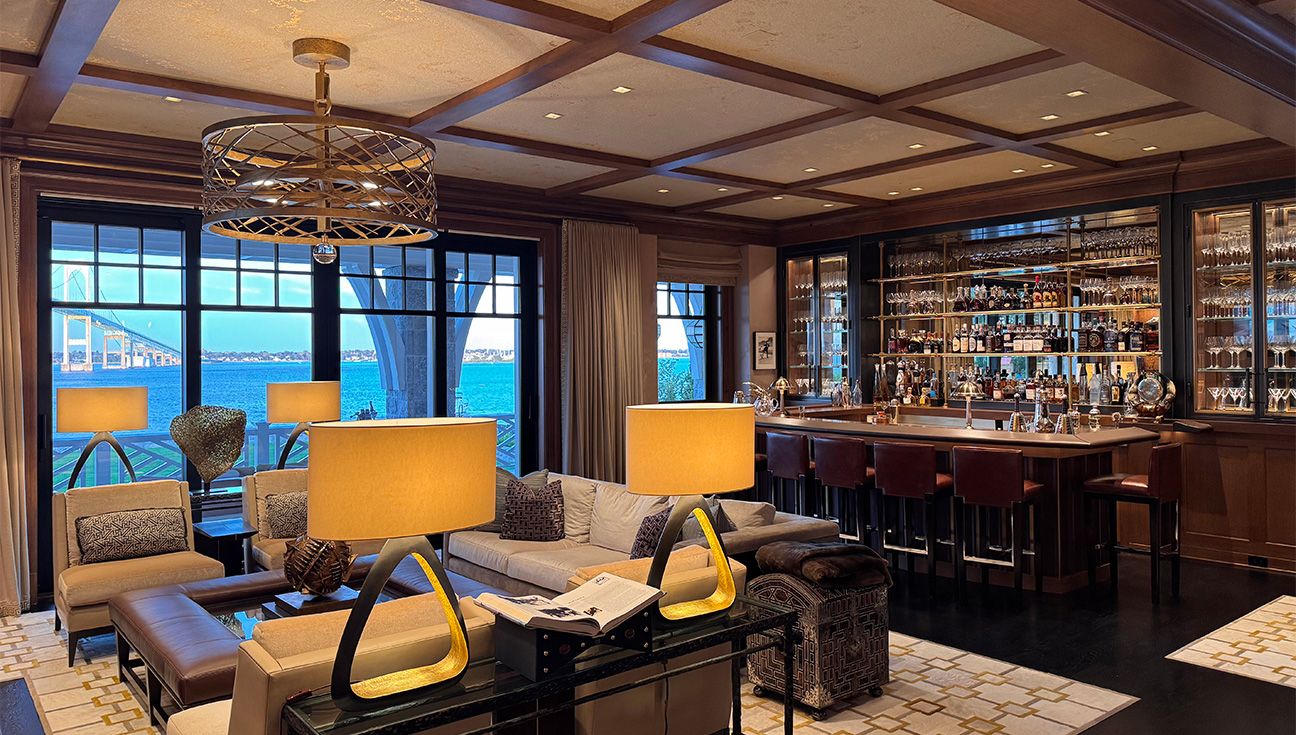
What’s so special about this property is how the scenery, the lighting and shades all play off each other. Whether it’s opening the shades to reveal views of the bridge at sunset or walking the property at night and seeing how the light highlights the stonework and sculptures — it creates a truly special space.
The Solution
C&T’s strategy began where many complex residential projects do: with what’s already in the ground. Rather than stripping out existing infrastructure, the team leveraged one of HomeWorks’ defining strengths—its longevity. The cottage’s QS system, still running reliably after years of service, was brought into the unified network using link translators that bridge generations of HomeWorks technology. No rip-and-replace, no reprogramming from scratch — just a clean integration path from the proven system to the current platform.
In the original home, the situation called for a different approach. C&T retrofitted it with HomeWorks—reusing existing wiring from the third-party control system to minimize disruption. The result was a home that went from frustrating to intuitive overnight, without a single new wire pulled through the walls.
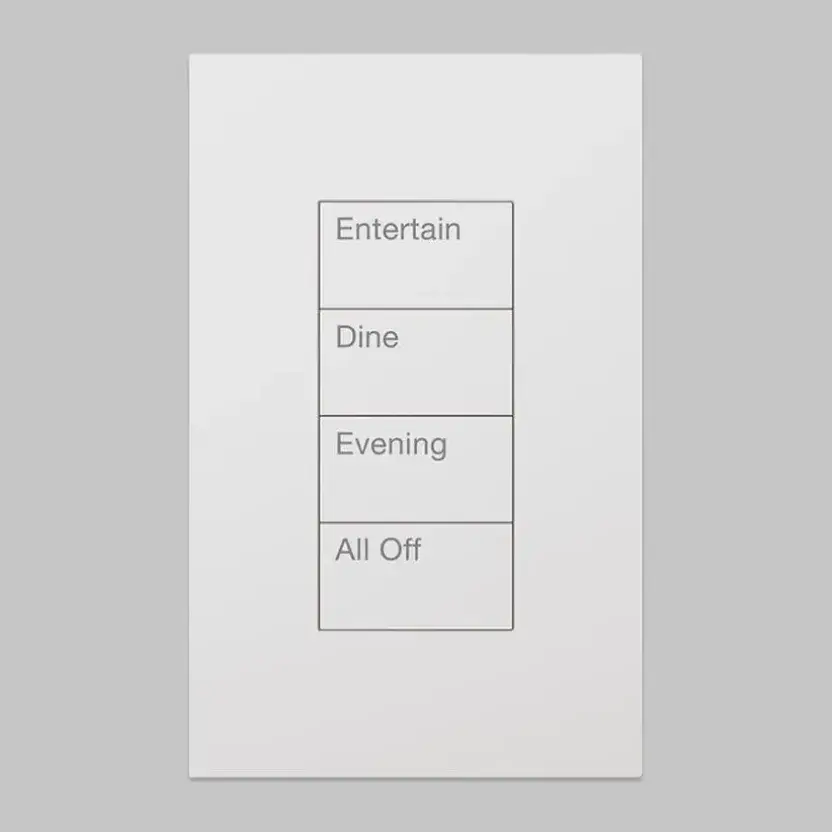
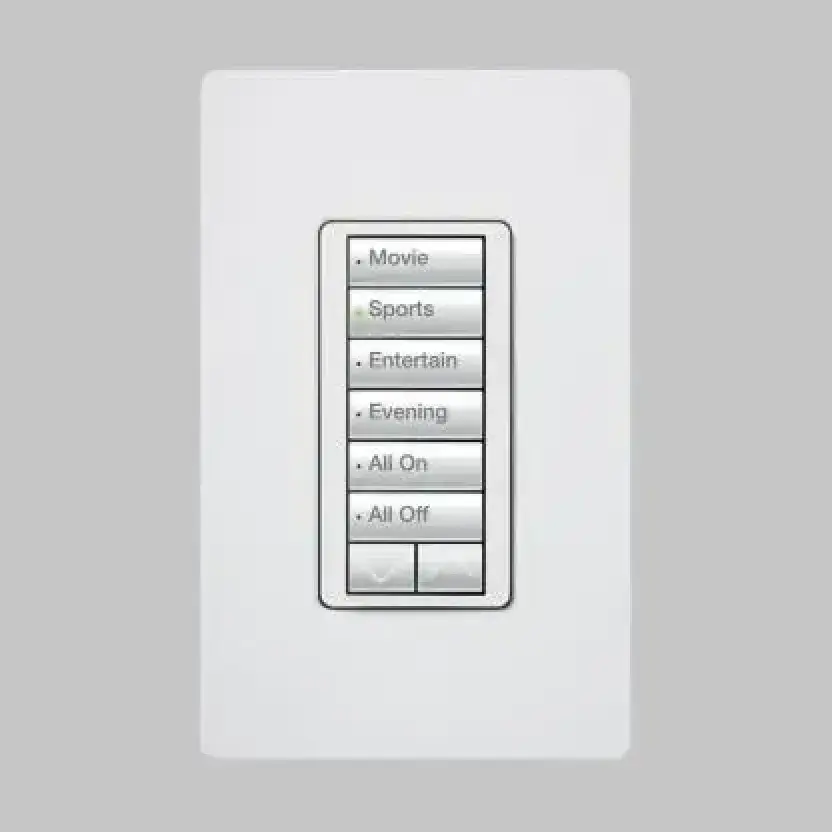
With the southern properties unified, the team turned their full attention to the new residence. Here, Palladiom glass keypads were selected to complement the home’s refined interiors—each one a tactile, hand-finished control point that feels more like architectural detail than technology. Scene-based programming was designed to govern the full scope of the estate from any keypad or the Lutron app.
C&T designed control around moments, not rooms. A “Party” scene transforms the full estate in seconds: landscape lighting traces the paths between homes, outdoor heaters and fire features come alive, and the indoor spaces shift to a warm, inviting glow tuned for gathering. A “Movie” scene draws the theater into darkness—shades descend, the screen rises into position, and the lighting settles to a soft amber that disappears the moment the projector flickers on. Shades lower automatically at midday to protect artwork from direct sun. Whether the owners are hosting a quiet evening or a gathering of hundreds, the tone is set with a single press—or a tap from the Lutron app, anywhere on the property or away from it entirely.
The numbers tell part of the story: 86 motorized shades and drapes, 150 dimming and switching modules, 167 keypads across the three homes. But the number that matters most is one—one system governing the entire property, from the fire pits along the ocean to the wine cellar beneath the new residence.
From a controls perspective, a property this large can feel daunting — for an integrator and homeowner alike. What makes this property special is just how easy it is to interact with. Keeping things simple made the scale of this system almost disappear. From a single button press, this estate transforms from a home to a soirée.


The Results
The estate now operates the way it was always meant to—as one property, not three. The technology recedes entirely; what remains is the experience. Sunset over the Atlantic with the shades drawing open. A path of light across the grounds as evening settles in. The quiet transition from an intimate dinner to a full-property celebration, handled without friction and without a second thought.
For C&T Electric, the Rhode Island Estate stands as proof of what’s possible when deep system knowledge meets a homeowner’s ambition. Three decades of construction, three generations of technology, one unified experience delivered by an integrator who understood that the highest compliment a control system can receive is to be forgotten entirely.
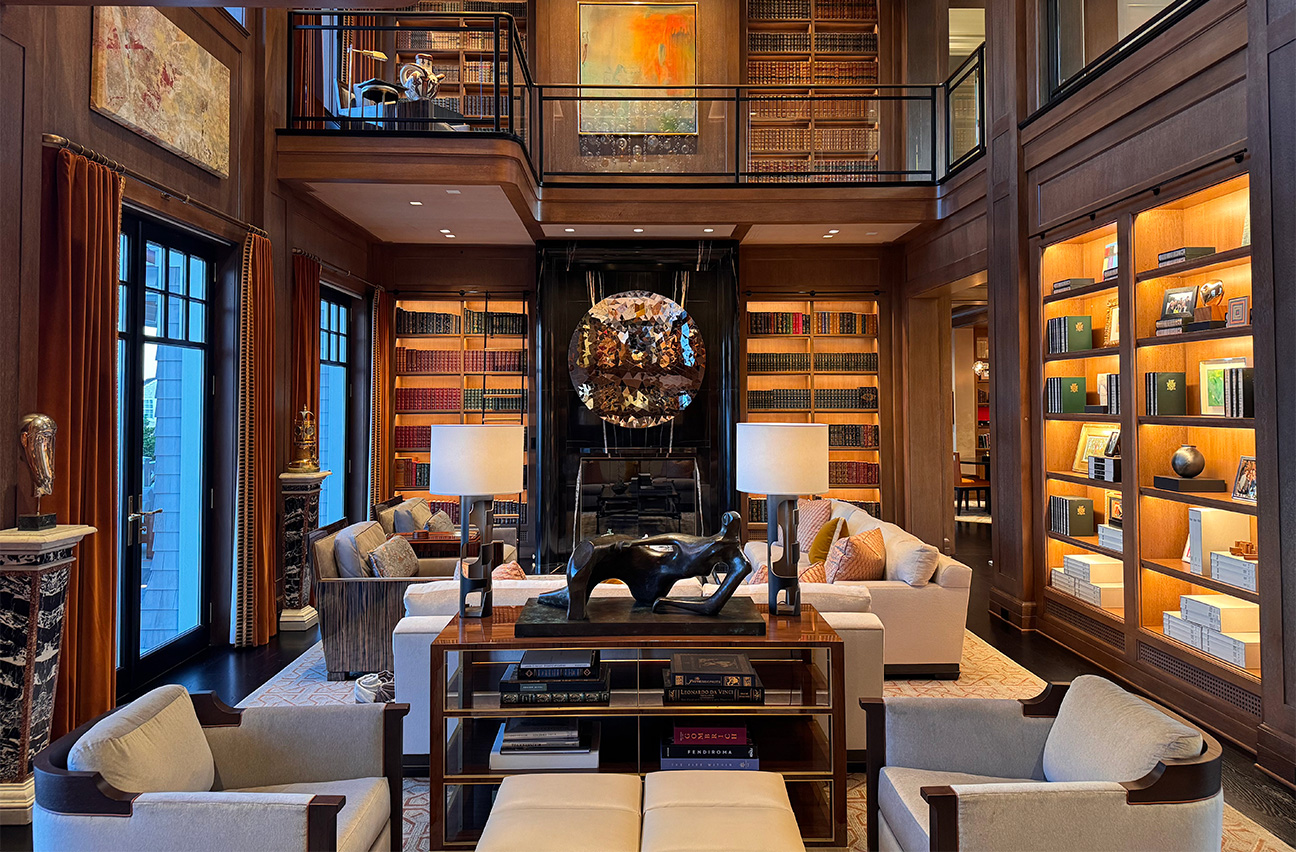
We’ve been lucky enough to work in some truly incredible places, but there’s something about this project that stays with me. Every detail comes together to make such a special home.